PwC’s “The director’s guide to shareholder activism” indicates that activism remains elevated globally and continues to evolve as a persistent governance issue for boards. Campaign volumes have reached record highs, with the US still accounting for the largest share, with activism increasingly translating into tangible outcomes such as board change, strategic shifts, and CEO turnover.
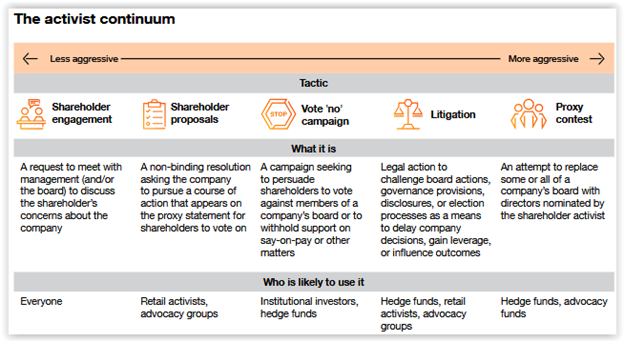
The report reiterates an expansive definition of activism—encompassing not only traditional proxy contests, but also engagement, shareholder proposals, and “vote no” campaigns—and frames these tactics along a continuum from routine engagement to full proxy fights. It also emphasizes that escalation is more likely when investors perceive weak execution, gaps in oversight, or limited credibility in strategy. Along this spectrum, lower-cost tactics such as withhold-vote campaigns and targeted opposition to directors are increasingly used to build leverage and test shareholder sentiment without launching a full contest.
At the same time, the activist landscape itself is shifting. A growing number of campaigns are being led by smaller or newer funds—often targeting small- and mid-cap companies—while institutional investors continue to exert significant influence through voting power and engagement. Meanwhile, changes in ownership reporting, pass-through voting, and scrutiny of proxy advisors are fragmenting traditional indicators of investor sentiment and raising the bar for boards to understand their shareholder base.
The guide also outlines common activist triggers, including underperformance, governance weaknesses, and environmental or social shortcomings, and emphasizes that boards play a critical role in anticipating and responding to activism through proactive engagement, strategy assessment, and governance review.
Access additional resources on our Shareholder Activism page.
This post first appeared in the weekly Society Alert!