A recent analysis by DragonGC of 406 S&P 500 proxy statements filed between January 1 and May 1, 2026, found that while tariff-related disclosures increased significantly during the 2026 proxy season, only 62 companies explicitly linked tariff developments to executive compensation decisions. Among those companies, four distinct disclosure approaches emerged, reflecting different compensation committee philosophies regarding how tariff impacts should be addressed in incentive plan design, performance assessment, and payout determinations.
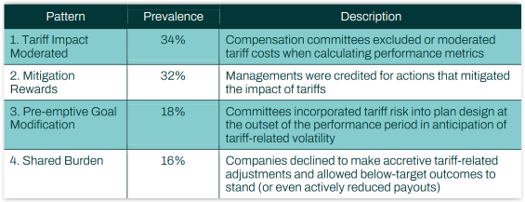
The most common approach, represented by 34% of the companies, involved partially or fully neutralizing tariff impacts when evaluating performance. Under this approach, compensation committees excluded or adjusted tariff-related costs from financial performance metrics, generally on the grounds that tariffs were unbudgeted external events o utside management's control.
A nearly equal proportion (32%) followed a mitigation rewards approach. Rather than simply adjusting results, these companies highlighted management actions taken to reduce tariff-related impacts, such as supply chain restructuring, sourcing changes, pricing actions, or other actions. Committees credited executives for successfully mitigating tariff-related challenges, often through qualitative assessments or strategic performance measures.
The third category, pre-emptive goal modification (18%), consisted of companies that incorporated anticipated tariff risk into incentive plan design at the outset of the performance period. Examples included setting anticipatory targets, widening performance ranges, establishing predetermined adjustment mechanisms, or adopting structures intended to accommodate potential tariff-driven volatility.
Finally, 16% of companies adopted a shared burden approach, declining to make favorable tariff-related adjustments and allowing incentive outcomes to reflect the impact of tariffs on company performance. In some cases, committees expressly emphasized alignment with shareholder experience and the importance of maintaining the integrity of established performance goals.
The report notes that these four approaches were identified from the 62 companies that linked tariffs to executive compensation outcomes and that some companies displayed elements of more than one pattern. The analysis also includes illustrative disclosure language drawn from 2026 proxy statements filed by S&P 500 companies through May 1, 2026, providing examples of how compensation committees explained their treatment of tariff-related impacts in CD&A disclosures.
Request the full report from DragonGC here.
This post first appeared in the weekly Society Alert!